AI Virtual Receptionist vs Human Virtual Receptionist: The Comparison Every Small Business Needs to Read
Category: Virtual Receptionist | By: Sumit Khanna, founder of Voizematic | Published: | Updated: | Read time: 8 min read
AI virtual receptionists answer calls around the clock, book appointments into Google Calendar, and charge by the minute. Human services rely on people and fixed coverage.
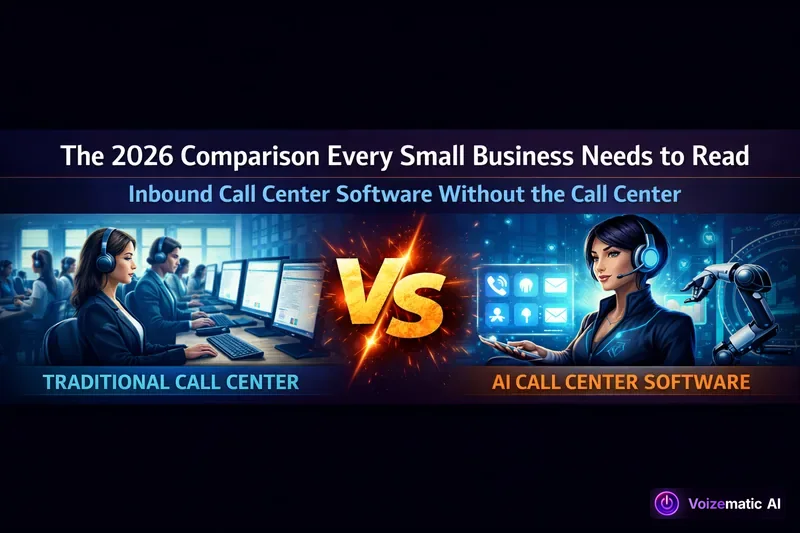
The choice is no longer just between a person answering the phone and a machine that takes messages. An AI virtual receptionist can answer inbound and outbound calls, book appointments into Google Calendar during the call, send Gmail confirmations, and work in Hindi, English, and many other languages. A human virtual receptionist can offer human judgment, but it cannot match that phone-to-calendar workflow.
What does a human virtual receptionist do?
A human virtual receptionist service is a staffed call answering service. It can pick up incoming calls, take messages, transfer urgent calls, and speak with callers in a natural way. That is useful when you want a person on the line.
The limits are built into the model. A human receptionist works only for the hours covered by the team. It cannot answer every call at all times unless you pay for that coverage. It also cannot be expected to manage live Google Calendar booking during the call, send Gmail email from your account, remember every caller across calls in the same way a software system can, or log each call automatically to Google Sheets.
What does an AI virtual receptionist do differently?
Voizematic AI is a platform for building and running AI voice agents that make and receive phone calls. After login, a voice assistant sits at the bottom-right of the panel and helps users navigate the site, open pages, and understand features. There is no separate onboarding, demo, or tutorial process.
The agent can answer inbound calls and also place outbound calls, including bulk campaigns. It understands Hindi and English, including code-mixed speech, and it can also work across 50+ languages with mid-call switching. That means a caller can begin in one language and change part-way through the same call.
The agent can also do practical work during the call. It can book an appointment into a connected Google Calendar, send email through Gmail, and transfer the call to a human when needed. Each conversation can carry memory for that caller, so the interaction does not begin from scratch every time.
How do pricing models differ?
The main difference is how the service is billed.
Voizematic uses wallet-based billing. Users add money to a wallet and start. Billing is per minute, not per seat. There is no monthly fee.
The current pricing is per connected minute, GST extra:
- Standard AI Voice: ₹4/min ($0.05), falling to ₹3 as monthly volume grows
- Premium Real-Time AI: ₹9/min ($0.11) flat
The plan name does not set the rate any more; the voice engine does. Full details are at voizematic.ai/pricing.
Every new account also receives ₹150 ($2) of free calling credit. Phone numbers rent for ₹199 ($2) per month.
By contrast, a human virtual receptionist service is usually sold as a monthly service with coverage rules, staffing limits, and separate arrangements for extended hours. The payment is tied to access to people, not to connected call minutes.
Which option is better for appointments and follow-ups?
If your main requirement is live appointment handling, the AI model has a clear operational advantage. Suppose a clinic receives a call asking for a consultation slot. The AI can check the connected calendar, offer available times, book the selected slot, and send the confirmation email before the call ends.
That matters because it removes handoff points. There is no need to wait for a receptionist to see the request, no separate scheduling link for the caller to open later, and no manual transcription from call notes into a calendar.
Human receptionists can still take the message and pass it on. But the booking itself depends on the human workflow, not on an automatic live integration.
What other business controls does Voizematic include?
Voizematic includes controls that are useful for phone operations and compliance.
For outbound calls, it runs TCPA and DNC screening before dials, checking FTC and state lists. It also logs every call to Google Sheets. The Call Intelligence Engine adds sentiment, outcome, and next action for each call. That gives the team a structured record of what happened and what should happen next.
The platform also supports WhatsApp and Telegram agents alongside voice agents. So the same business can use chat and voice in one system, rather than managing each channel separately.
So which virtual receptionist should a small business choose?
Choose a human virtual receptionist if you want a person answering calls and your needs fit within a staffed coverage model. Choose an AI virtual receptionist if you want the phone system to do more of the work itself: answer calls, understand Hindi and English, book into Google Calendar, send Gmail confirmations, handle inbound and outbound calling, and keep call records and memory in one place.
For many small businesses, the key question is not whether a person sounds warmer. It is whether the receptionist can complete the business task during the call. That is where an AI voice agent can be the more practical option.
About the author: Sumit Khanna is the founder of Voizematic and builds the platform's voice agents, telephony and billing. He publishes live call demos on the Voizematic YouTube channel.
About Voizematic: Voizematic is an AI voice agent platform that answers and places phone calls for businesses. Agents book Google Calendar appointments live during the call, send Gmail confirmations, run TCPA-compliant outbound campaigns and log every call to Google Sheets. Pricing is per connected minute — Standard from ₹4 ($0.05), Premium ₹9 ($0.11) — with no monthly fee.
← Back to Blog | See Pricing | Start free with ₹150 ($2) credit