Multilingual AI Phone Agents: How Outbound AI Voice Agents Unlock International Markets
Category: Global Expansion | By: Sumit Khanna, founder of Voizematic | Published: | Updated: | Read time: 6 min read
Voizematic AI voice agents speak Hindi and English, including code-mixed speech, and support 50+ languages with mid-call switching.
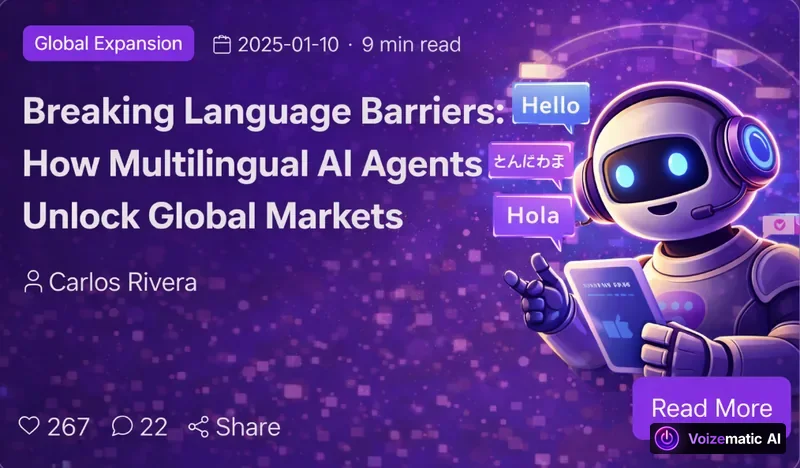
Language is a practical barrier in outbound calling. If your team calls a prospect in the wrong language, the conversation often stalls before it begins. Voizematic AI solves this by letting you run inbound and outbound voice agents that speak and understand Hindi and English, including code-mixed speech, and support 50+ languages with mid-call switching.
Why does language matter in outbound calling?
Outbound calling works best when the prospect can follow the conversation without effort. A script that is clear in one language can sound stiff or confusing in another. If the agent cannot switch naturally, the call loses pace.
Voizematic AI voice agents are built to speak in the language the caller uses. That matters because the same call flow can be used across regions and audience groups without rebuilding the process for each language. The agent can continue the conversation, ask for the next step, and keep the call moving.
How does a multilingual AI phone agent work?
Voizematic AI is a platform for building and running AI voice agents that make and receive phone calls. After login, a voice assistant appears at the bottom-right of the panel. It can navigate the site, open pages, and explain features, so there is no separate demo or tutorial needed.
Once you add money to your wallet, you can start. Billing is per connected minute, not per seat. That makes the model suitable for teams that want to run campaigns without managing licences for every caller.
The agent can handle the call itself and also support practical business actions during the conversation:
- book appointments into a connected Google Calendar during the call
- send email through Gmail
- transfer the call to a human when needed
- log every call to Google Sheets
- keep per-caller conversation memory for later calls
Because these actions are tied to the call flow, a multilingual setup does not mean a separate stack for each language. The same agent can speak, record the outcome, and move to the next action.
What languages does the platform support?
Voizematic agents speak and understand Hindi and English, including code-mixed speech. The platform also supports 50+ languages with mid-call switching.
That is useful when a caller starts in one language and then changes to another, or when a campaign needs to cover mixed audiences. Instead of ending the call or forcing the prospect into one language, the agent can continue the conversation in the language that fits best.
For outbound use, this helps you run the same campaign structure across different markets while keeping the actual call natural. For inbound use, it helps callers get help in the language they are most comfortable with.
How do multilingual agents help with outbound campaigns?
The main advantage is not just language coverage. It is continuity. The same agent can identify the conversation context, continue from the last interaction, and move the caller to a next step without pausing for translation.
In practice, this means a multilingual outbound campaign can:
- open the call in the caller’s language
- continue the same thread if the caller switches language mid-call
- book a meeting directly into Google Calendar
- send a follow-up email through Gmail
- record the outcome in Google Sheets
- hand over the call to a human if the caller asks for it
Suppose a clinic is calling a mixed-language audience. The agent can start the call, answer basic questions in the caller’s language, book a slot, and send the confirmation email without moving the caller to a different system. The benefit comes from keeping the full journey inside one call.
How does Voizematic handle compliance and call management?
For outbound dialling, Voizematic runs TCPA/DNC screening before the dial. It checks FTC and state lists, so compliance screening happens before the call is placed.
The platform also supports bulk campaigns. That matters for multilingual calling because you can segment by audience, run campaigns at scale, and still keep the same compliance and logging process across every call.
Other built-in controls include:
- call logging to Google Sheets
- call intelligence with sentiment, outcome, and next action per call
- per-caller conversation memory
- call transfer to a human when required
These tools help the team review calls, route follow-ups, and keep the next step clear.
What does it cost to run multilingual AI voice agents?
Voizematic pricing is per connected minute, with no monthly fee and GST extra. Plans no longer set the rate; the voice engine does.
Current pricing details are available at voizematic.ai/pricing:
- Standard AI Voice: ₹4/min ($0.05), falling to ₹3 as monthly volume grows
- Premium Real-Time AI: ₹9/min ($0.11) flat
Every new account receives ₹150 ($2) of free calling credit. Phone numbers rent for ₹199 ($2) per month.
Because billing is minute-based, multilingual use does not require a separate licence for each language or each seat. You fund the wallet, run the call, and pay for connected time.
Is multilingual support useful for both inbound and outbound use?
Yes. The same language capability helps on both sides of the call.
For outbound, it lets the agent open conversations with prospects in the right language, handle objections, and move to booking or follow-up. For inbound, it helps callers get answers quickly without language becoming a barrier.
Voizematic also supports WhatsApp and Telegram agents alongside voice agents. So if your audience prefers a chat channel for follow-up, you can keep the contact in the same workflow.
The practical value of multilingual support is simple: fewer handoffs, less friction, and a call flow that stays usable across different audience groups. When the agent can speak the caller’s language, the process becomes easier to follow and easier to complete.
About the author: Sumit Khanna is the founder of Voizematic and builds the platform's voice agents, telephony and billing. He publishes live call demos on the Voizematic YouTube channel.
About Voizematic: Voizematic is an AI voice agent platform that answers and places phone calls for businesses. Agents book Google Calendar appointments live during the call, send Gmail confirmations, run TCPA-compliant outbound campaigns and log every call to Google Sheets. Pricing is per connected minute — Standard from ₹4 ($0.05), Premium ₹9 ($0.11) — with no monthly fee.
← Back to Blog | See Pricing | Start free with ₹150 ($2) credit